Mitsubishi clarifies Pajero and Pajero Sport differences
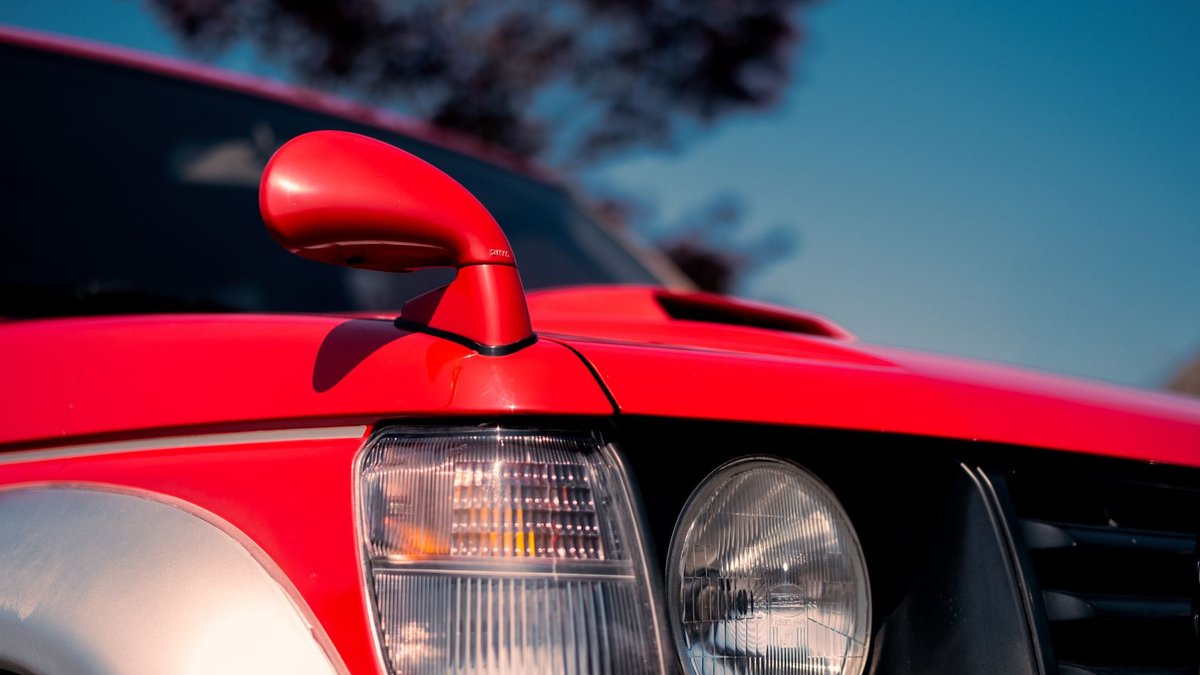
Mitsubishi Pajero and Pajero Sport share the same brand name but fulfill distinct purposes within Mitsubishi’s SUV lineup. Though both deliver strong off-road performance, they target different buyer needs—one as a luxury flagship, the other as a practical mid-size option. The naming overlap creates confusion, but their design, dimensions, and intended uses clearly separate them as distinct models.
Physical Dimensions Set Them Apart
The primary distinction lies in their size. The newly launched Mitsubishi Pajero measures 4,920 mm in length, 1,925 mm in width, and 1,910 mm in height, with a wheelbase of 2,870 mm. In comparison, the Pajero Sport is shorter at 4,840 mm, narrower (1,815 mm), and slightly taller (1,835 mm), with a wheelbase of 2,800 mm. These measurements align with their market positioning: the Pajero is marketed as an exclusive full-size SUV, while the Pajero Sport serves as a mid-size option for everyday driving.
Mitsubishi’s Indonesian Brand Ambassador Rifat Sungkar confirmed this separation in a recent statement. “They represent two different vehicle classes,” he explained. “The Pajero is designed as a premium, larger SUV, while the Pajero Sport remains a compact, practical choice.” The size difference ensures the new Pajero does not replace the Pajero Sport but instead fills a separate segment in Mitsubishi’s lineup.
Beyond aesthetics, their dimensions influence performance. The Pajero’s longer wheelbase and wider stance enhance stability on rough terrain, whereas the Pajero Sport’s smaller footprint improves maneuverability in city traffic. Both models exist because drivers have varying requirements—one for rugged adventures, the other for daily commutes.
Off-Road Systems: Shared Foundation, Different Capabilities
Despite their differences, both SUVs inherit Mitsubishi’s off-road legacy through the Super Select 4WD-II system, offering 2H, 4H, 4HLc, and 4LLc modes. However, the Pajero expands this with seven drive modes, Normal, Eco, Gravel, Snow, Mud, Sand, and Rock, while the Pajero Sport provides four (Mud/Snow, Gravel, Sand, and Rock).
The Pajero further enhances off-road performance with Super All-Wheel Control (S-AWC), a system that dynamically adjusts torque distribution for better traction. This advanced feature is absent in the Pajero Sport, which relies solely on the base Super Select 4WD-II. The broader mode selection in the Pajero reflects its role as a more adaptable off-road vehicle, while the Pajero Sport simplifies its setup for drivers who rarely venture off pavement.
Underneath, their suspension systems differ. Both use a Double Wishbone front setup, but the Pajero incorporates a Multi Link 5 Link rear suspension, compared to the Pajero Sport’s Multi Link 3 Link. The Pajero also boasts a higher ground clearance of 230 mm, exceeding the Pajero Sport’s 218 mm. These engineering choices allow the Pajero to handle steeper terrain, while the Pajero Sport maintains stability on highways.
Feature Differences Align with Their Roles
The Pajero reinforces its premium status with high-end features, including a 12-speaker Dynamic Sound Yamaha Ultimate audio system, Mitsubishi Connect infotainment, eight airbags, and an expanded ADAS suite. The Pajero Sport, by contrast, offers seven airbags and basic ADAS, sufficient for daily driving but lacking luxury refinements.
Market Positioning and Availability in Indonesia
The Mitsubishi Pajero Sport will continue to be offered in Indonesia, maintaining its role as a well-established SUV for local consumers. The model has been a recognized choice in the market for some time, catering to drivers who prioritize a smaller, more practical vehicle. Mitsubishi has stated that the Pajero Sport remains a key model for the company in the country, ensuring its ongoing availability.
The All-New Mitsubishi Pajero has been officially introduced globally. However, as of now, there has been no official announcement regarding its release in Indonesia.
The distinction between the two models aligns with varying consumer needs in Indonesia, where some buyers prefer a compact SUV for daily use while others may seek a larger vehicle for extended off-road capabilities. Mitsubishi’s approach ensures both options remain accessible, depending on individual preferences and intended use.
Indonesian Market Forces
The Pajero Sport has long been a dominant force in Indonesia’s SUV market, appealing to buyers seeking rugged styling without the bulk of a full-size vehicle. Its compact size, lower price, and proven reliability make it ideal for urban and light off-road use.


